
The Sacred
Bilona Process
Discover the ancient art of ghee-making that preserves all the nutritional goodness and creates a product unlike any other.
What is the Bilona Method?
The Bilona method is a sacred ritual that has been practiced for millennia. Unlike modern industrial methods that prioritize speed and quantity, this traditional technique honors the inherent qualities of the milk, allowing its transformation to unfold naturally.
In Sanskrit, "Bilona" refers to the process of churning. This method involves culturing milk into yogurt, hand-churning it to extract butter, and then slowly clarifying the butter into ghee. Each step is performed with intention and care, following rhythms established by our ancestors.
While industrial ghee can be produced in hours, the traditional Bilona process takes days. This patience allows for the development of complex flavors and preserves delicate nutrients that are often destroyed by high-temperature processing.
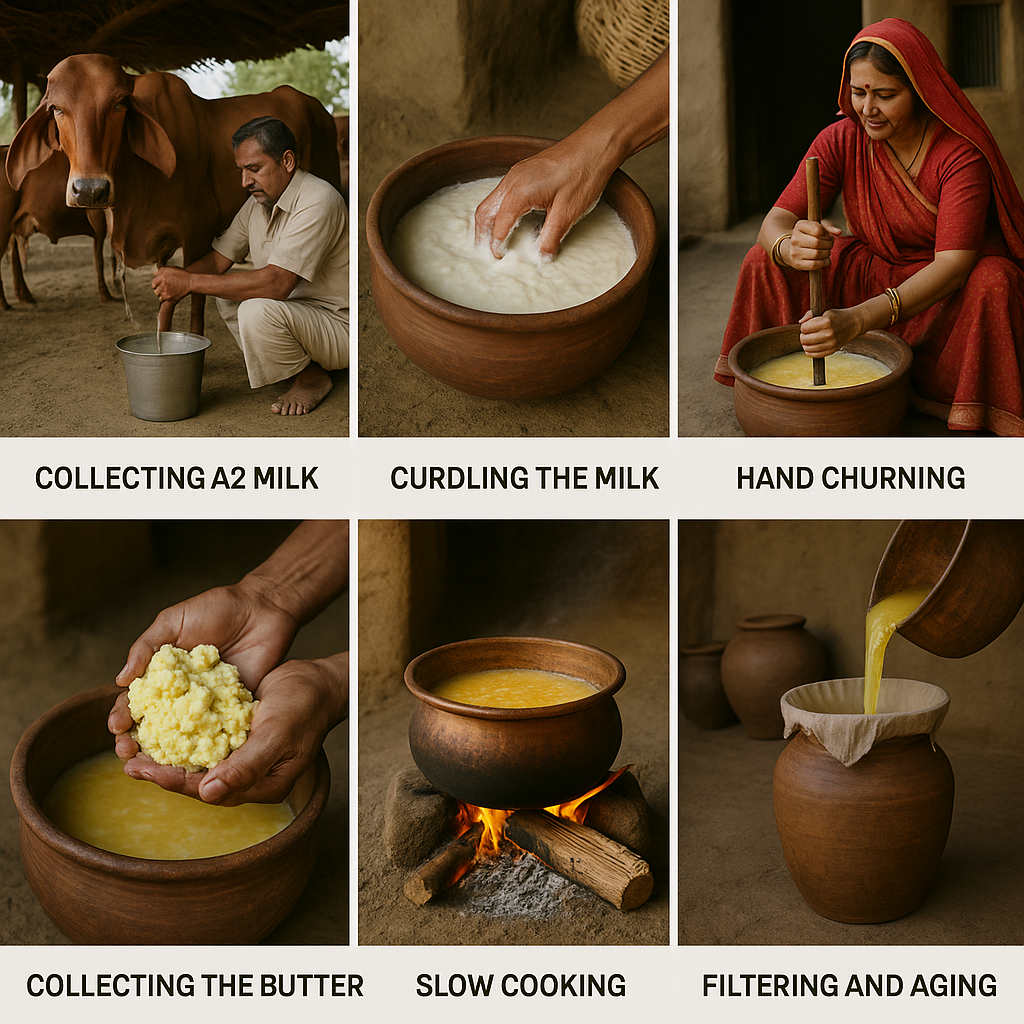
The Bilona Process Explained
Each step in our traditional process is performed with care and intention, honoring ancient wisdom
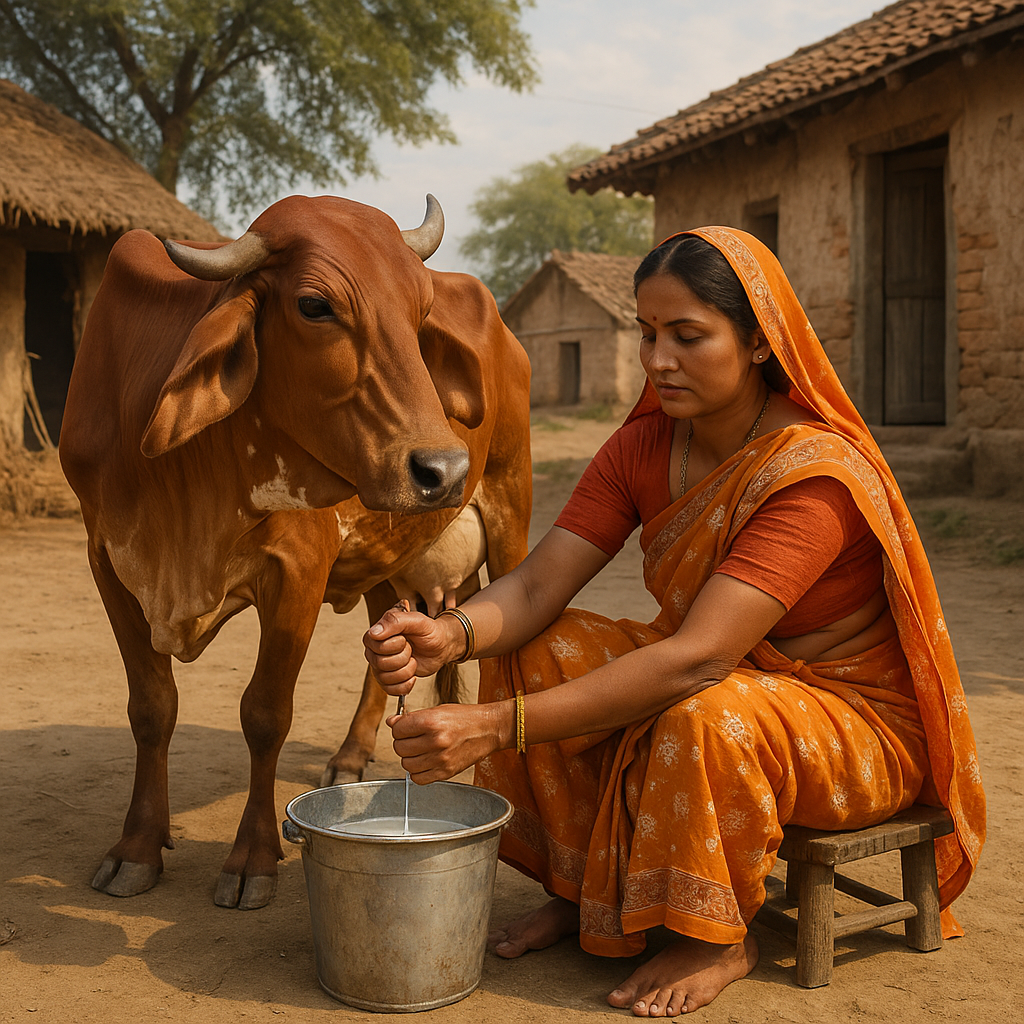
Collecting A2 Milk
We begin with pure A2 milk from indigenous Sahiwal cows, which are raised ethically and fed a natural diet. This milk contains only the A2 type of beta-casein protein, which is easier to digest than the A1 protein found in most commercial dairy.
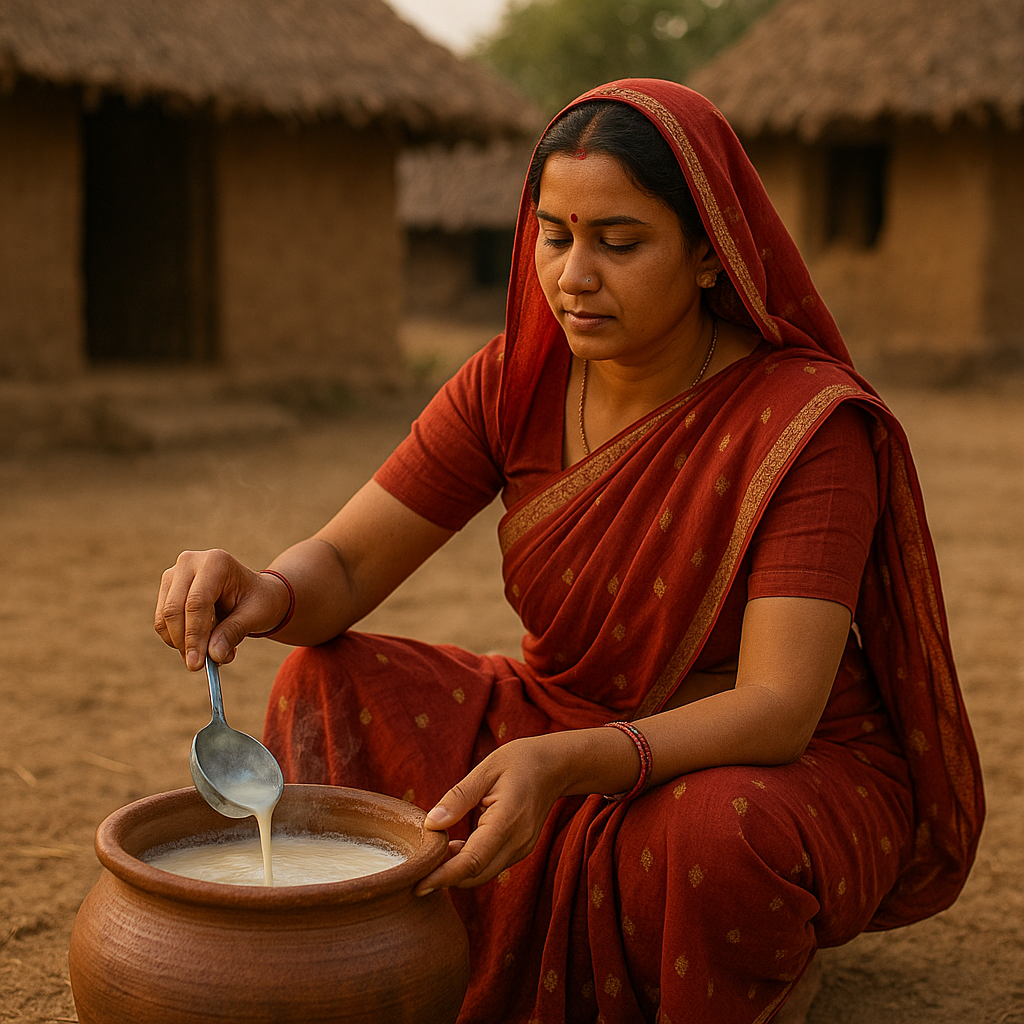
Curdling the Milk
The fresh milk is gently heated and cultured with traditional bacterial cultures. This process takes 12-16 hours, allowing beneficial bacteria to transform the milk into curd (yogurt) while developing complex flavors and increasing nutritional value.
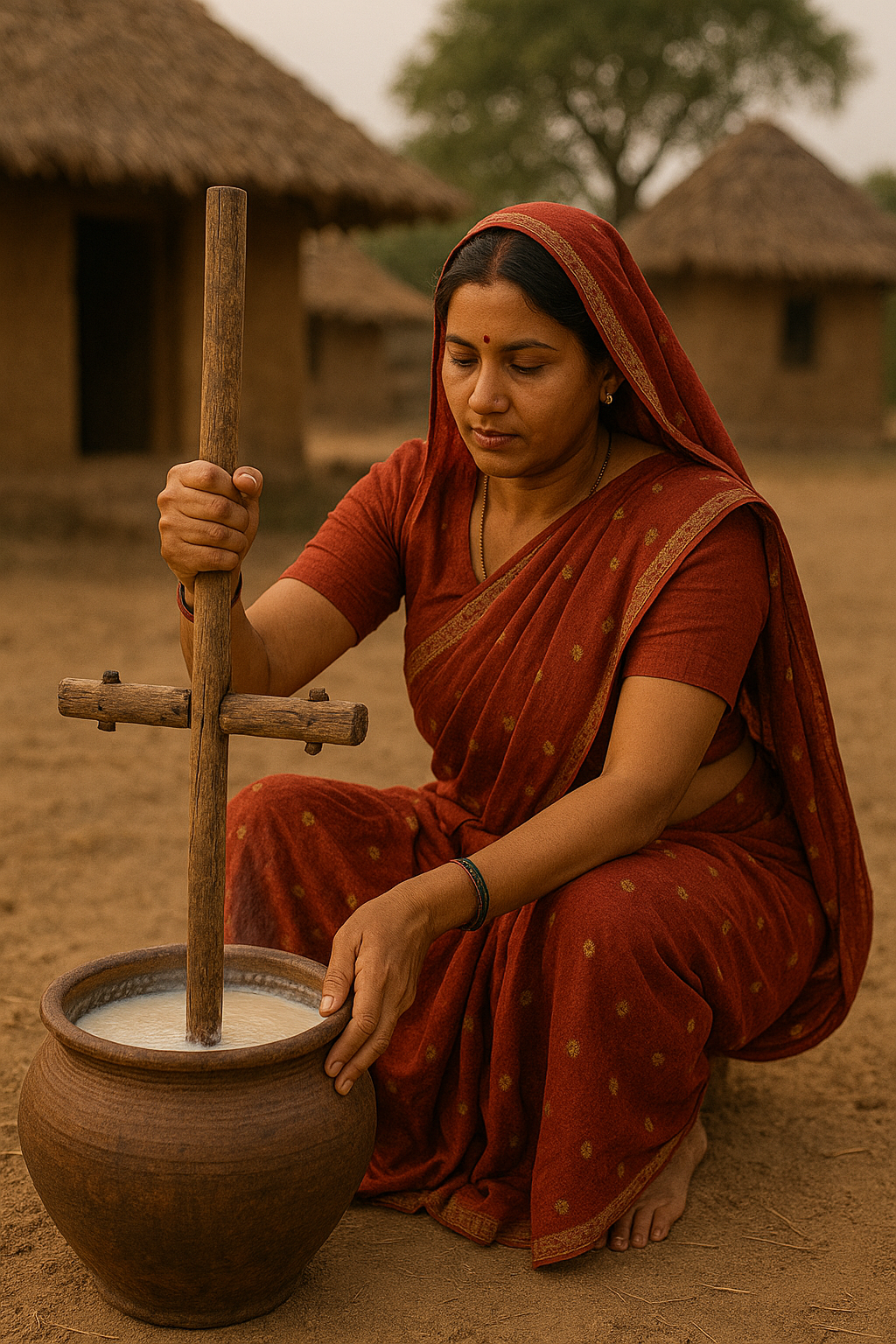
Hand Churning
The curd is then hand-churned using a traditional wooden churner called a 'madhani.' This slow, rhythmic process separates the butter from the buttermilk without generating excessive heat that could damage delicate nutrients.
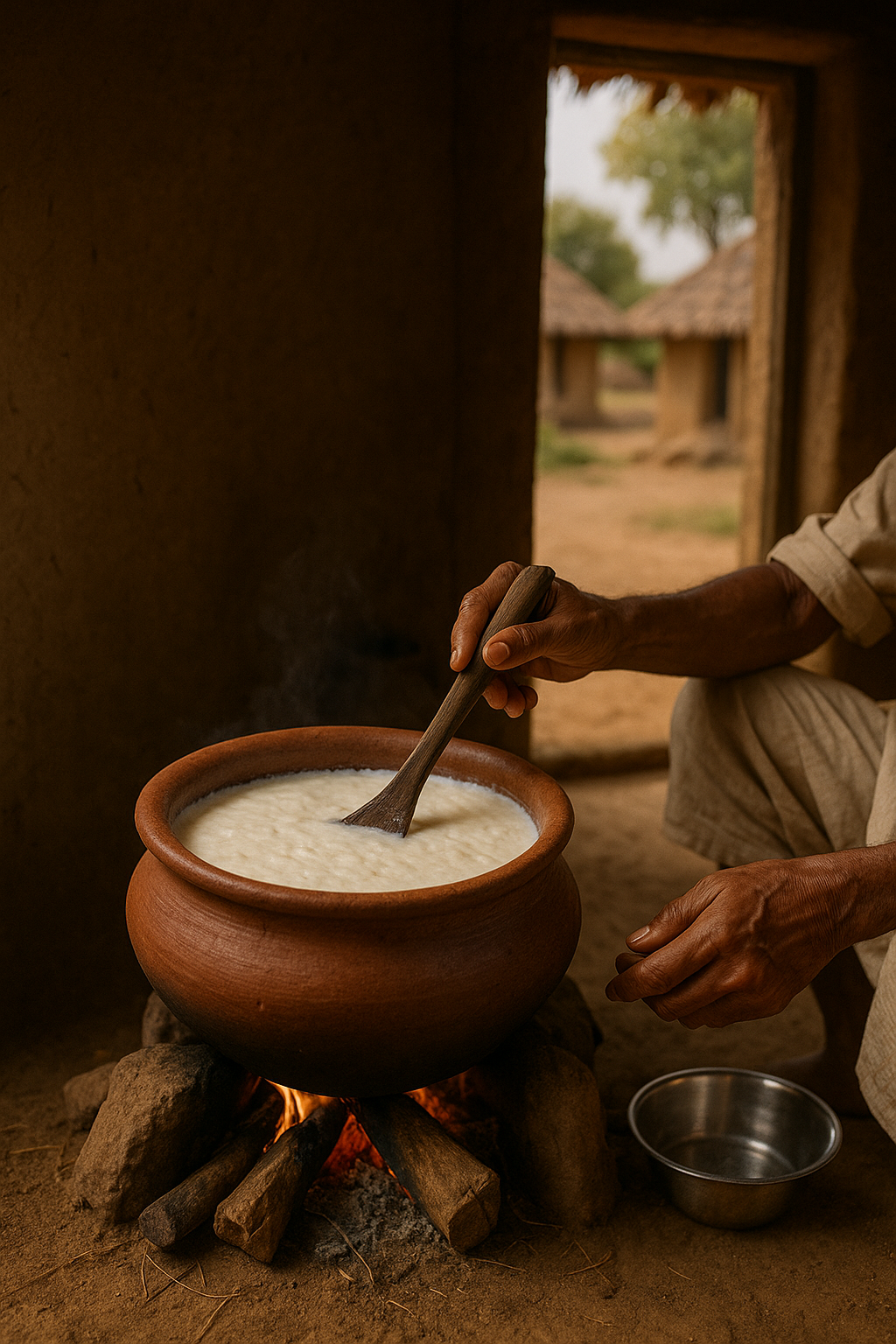
Collecting the Butter
Once the butter has separated, it's collected by hand and washed in pure water to remove any remaining buttermilk. This butter, rich in beneficial compounds, forms the base for our ghee.
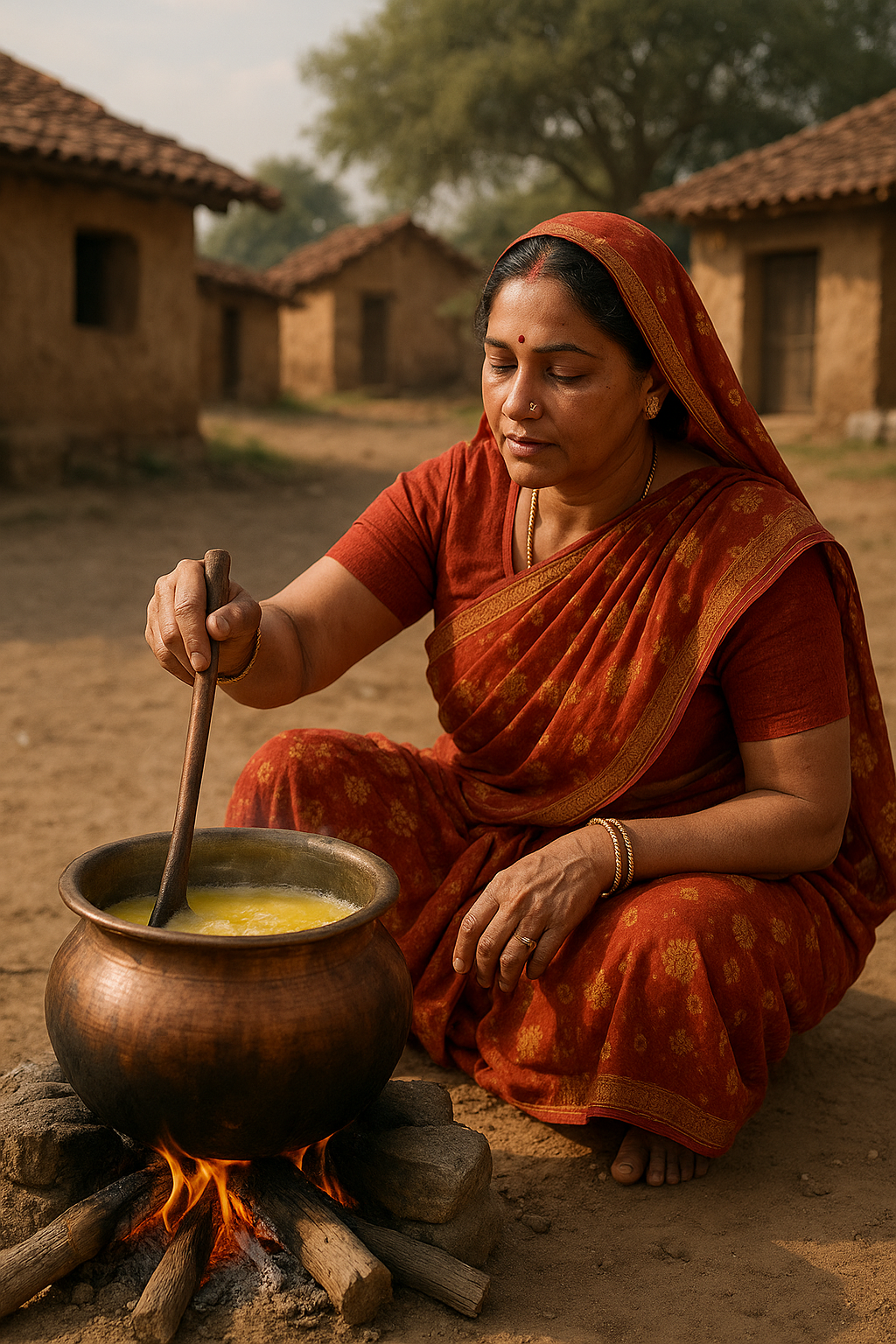
Slow Clarification
The butter is then slowly heated in a traditional mud pot over a low flame. This gentle process allows the water to evaporate and the milk solids to separate and caramelize slightly, creating ghee's distinctive nutty flavor.
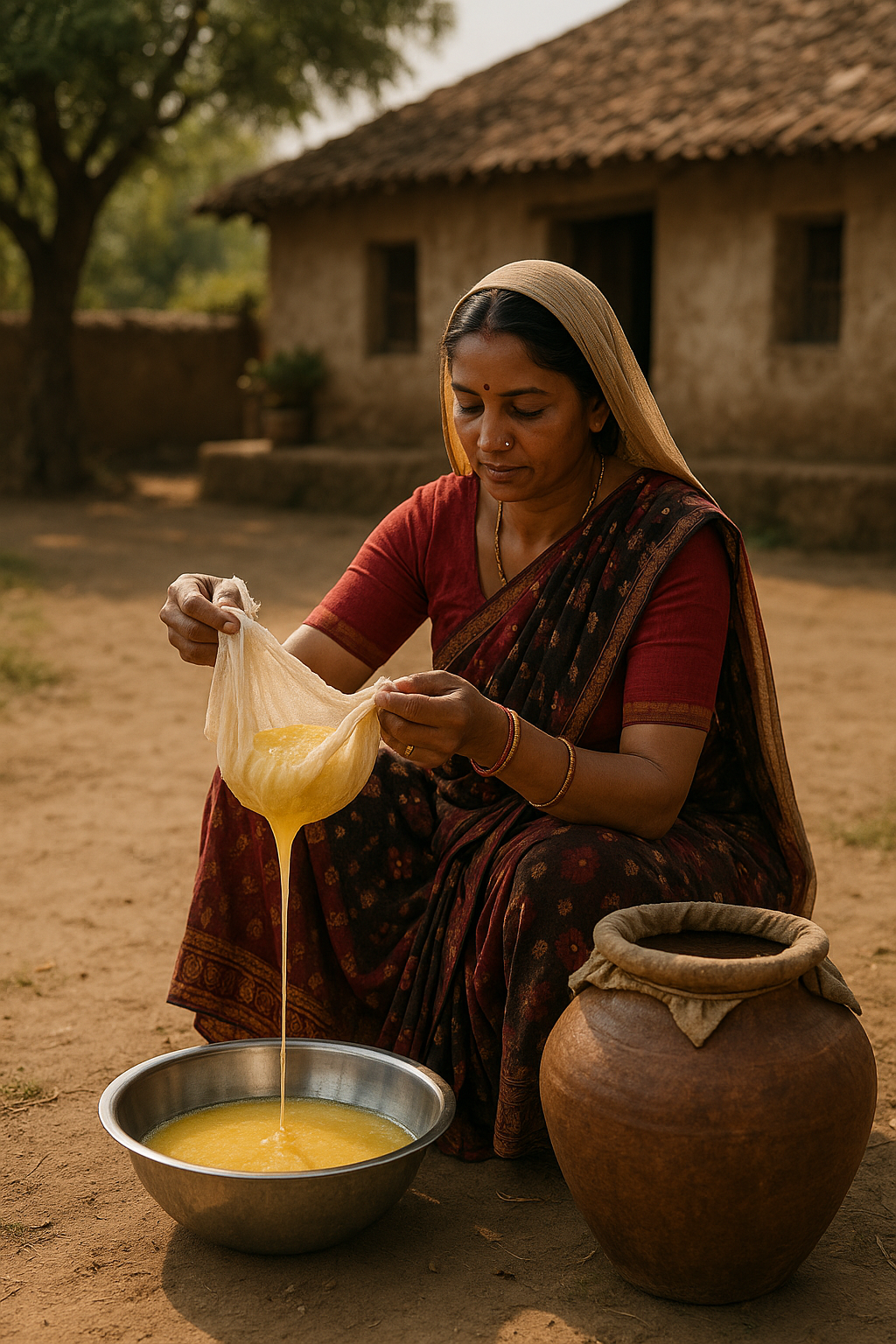
Filtering & Aging
Finally, the golden liquid is carefully filtered to remove all milk solids, resulting in pure ghee. It's then allowed to age for a specific period, which enhances its flavor, aroma, and medicinal properties according to Ayurvedic principles.
Traditional Bilona vs. Industrial Methods
Understanding what sets our traditional process apart from modern industrial production
Traditional Bilona Method
Time: 2-3 days from milk to ghee, allowing for natural fermentation and flavor development
Temperature: Low-temperature processing preserves heat-sensitive nutrients and enzymes
Culturing: Milk is cultured into yogurt, increasing beneficial compounds and improving digestibility
Churning: Hand-churned using traditional wooden churners, creating a gentle separation process
Flavor: Rich, nutty, complex flavor profile with subtle caramel notes from slow clarification
Nutrition: Higher in beneficial compounds like CLA, omega-3s and 6s,fat-soluble vitamins like A,D,E,K2
Industrial Method
Time: As little as 2-3 hours from cream to ghee, using high-speed centrifuges and high heat
Temperature: High-temperature processing destroys heat-sensitive nutrients and can create harmful compounds
Culturing: Often skips the culturing step entirely, using fresh cream directly
Churning: Uses mechanical separators and centrifuges that can damage the molecular structure of fats
Flavor: Mild, sometimes flat flavor profile lacking the complexity of traditionally made ghee
Nutrition: Lower levels of beneficial compounds due to high-heat processing and lack of fermentation
Taste the Bilona Difference
Experience the rich flavor and superior nutrition of ghee made the traditional way. Our A2 ghee is crafted with patience and care, following ancient wisdom that has stood the test of time.